



















The smartphone has been the defining consumer technology of the past 15 years, reshaping communication, commerce, entertainment, navigation, finance, and work. Yet the world’s largest technology companies are increasingly preparing for a future in which the phone is no longer the center of digital life. That does not mean smartphones will disappear soon. Rather, their role may gradually shift from the primary interface to one device among many in a broader network of intelligent, wearable, ambient, and immersive systems.
TLDR: Tech giants are investing heavily in technologies that could reduce society’s dependence on smartphones, including artificial intelligence, augmented reality glasses, wearables, voice interfaces, and ambient computing. The smartphone is unlikely to vanish quickly, but it may become less central as computing moves into eyewear, earbuds, vehicles, homes, and workplaces. The biggest challenges are not only technical, but also social, regulatory, and ethical, especially around privacy, safety, and trust.
A Shift From the Pocket to the Environment
For years, the smartphone acted as the universal remote control for modern life. It combined a camera, browser, map, wallet, entertainment screen, and communication tool into a single portable device. But the limits of that model are becoming clearer. Screens demand attention, apps create friction, batteries remain finite, and many interactions still require users to stop what they are doing, look down, and tap.
Technology companies now imagine a more seamless model: computing that appears when needed and fades into the background when not. This idea is often described as ambient computing. Instead of opening an app to complete every task, users may speak to an AI assistant, glance at smart glasses, receive health feedback from sensors, or interact with devices embedded in homes, vehicles, and workplaces.
This transition is not merely a matter of convenience. It represents a strategic effort by major companies to define the next dominant platform. Whoever controls the interface after the smartphone could control the next generation of search, advertising, commerce, productivity, entertainment, and data services.

Why Tech Giants Are Looking Beyond the Phone
Several forces are pushing companies to explore alternatives to smartphones. First, the global smartphone market has matured. In many regions, most people who want a smartphone already own one, and annual upgrades have become less compelling. Camera improvements, faster chips, and brighter screens still matter, but they no longer create the same sense of transformation that earlier generations did.
Second, artificial intelligence is changing expectations. Generative AI and advanced voice systems make it possible to interact with computers in more natural ways. If an assistant can summarize messages, schedule meetings, identify objects, translate conversations, and complete tasks, the traditional app grid may feel less essential.
Third, companies recognize that the smartphone can be a barrier between people and the world around them. A device that constantly pulls attention to a screen is powerful, but it can also be intrusive. The next wave of computing aims to be more context aware, more personal, and less dependent on constant visual engagement.
- Market maturity: Smartphone growth has slowed in many advanced economies.
- AI progress: Natural language interfaces are becoming more capable and widely adopted.
- Wearable adoption: Smartwatches and earbuds have accustomed users to connected devices beyond phones.
- Enterprise demand: Industries such as logistics, healthcare, and manufacturing need hands free tools.
- Platform control: Companies want to own the next major consumer computing ecosystem.
Apple, Meta, Google, Microsoft, and the Race for the Next Interface
Apple has approached the post smartphone future cautiously, emphasizing integration rather than abrupt replacement. Its ecosystem already includes the iPhone, Apple Watch, AirPods, Macs, and spatial computing devices. The company’s strategy appears to be gradual: build trust through familiar products, then expand into more immersive and wearable experiences. Apple’s work in health tracking, spatial interfaces, and personalized AI suggests that it sees the future as a connected web of devices rather than a single successor to the iPhone.
Meta has taken a more aggressive path. Its long term bet on virtual and augmented reality reflects a belief that social interaction, work, and entertainment will eventually move into immersive digital environments. While the broader “metaverse” concept has faced skepticism, Meta’s continued investment in headsets, smart glasses, avatars, and AI shows that it still believes the next platform will be visual, social, and spatial.
Google’s position is different. It already holds enormous influence through Android, search, maps, YouTube, and cloud AI. For Google, the future beyond smartphones may be less about a single new device and more about making its services available everywhere: in cars, speakers, TVs, watches, glasses, and enterprise tools. Its strength in AI could become especially important if the next interface is conversational rather than app based.
Microsoft has focused heavily on enterprise use cases. While its consumer mobile ambitions faded after the decline of Windows Phone, the company remains influential in cloud computing, productivity software, gaming, and AI. Its investments in mixed reality, workplace collaboration, and AI copilots suggest a future where the smartphone is less important for professional tasks than connected work environments and intelligent software agents.
Smart Glasses and Augmented Reality
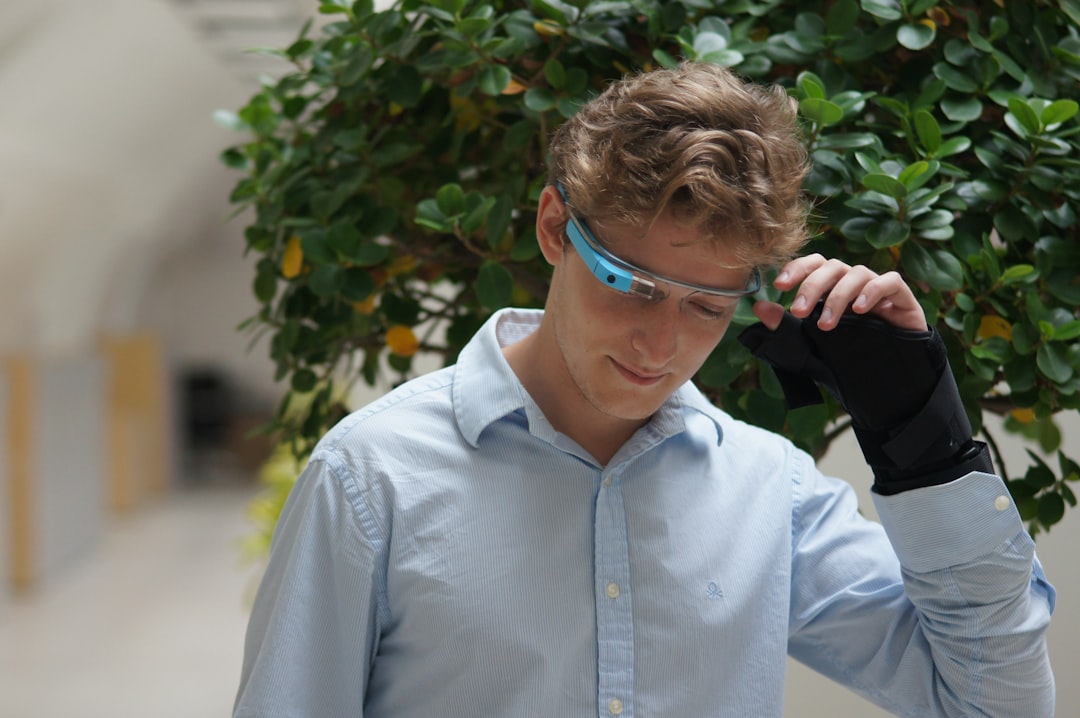
Among the most discussed candidates for replacing some smartphone functions are smart glasses. In theory, augmented reality glasses could display information directly in a user’s field of view: directions on a sidewalk, subtitles during a conversation, product details in a store, or repair instructions on industrial equipment. Unlike a phone, glasses can be hands free and context aware.
However, the technical challenges remain significant. Smart glasses must be lightweight, socially acceptable, visually clear, energy efficient, and powerful enough to run advanced features. They also raise sensitive privacy questions. A camera on a phone is visible and usually deliberate; a camera on someone’s face may feel more invasive. Companies will need to prove that such devices can be used responsibly before mass adoption becomes realistic.
Still, progress is visible. Early smart glasses have shown practical value for photography, translation, notifications, and AI assistance. Over time, as displays improve and components shrink, glasses could become a more natural way to access digital services without constantly reaching for a phone.
The Rise of AI Assistants as a New Operating Layer
Perhaps the most important development in the movement beyond smartphones is not hardware, but software. AI assistants are evolving from simple voice tools into systems capable of interpreting intent, coordinating tasks, and generating content. If these assistants become reliable, they could reduce the need to navigate individual apps.
For example, instead of opening separate applications to compare flights, book a hotel, check the weather, message a colleague, and update a calendar, a person might simply ask an AI agent to plan a trip within a budget and confirm the details. The assistant could operate across services, devices, and contexts. In that world, the smartphone screen is still useful, but it is no longer the main gateway to digital action.
This shift could also change business models. App stores, search engines, and advertising systems are built around user attention and direct interaction. AI agents may intermediate those relationships, deciding which information to present and which services to use. That gives companies a strong incentive to develop assistants that users trust and rely on daily.
Wearables, Health, and Personal Data
Wearables are already proving that important computing can happen outside the smartphone. Smartwatches monitor heart rate, activity, sleep, blood oxygen, and in some cases irregular heart rhythms. Earbuds provide voice access, translation, noise control, and spatial audio. Rings and other small sensors are expanding the range of continuous health and wellness tracking.
The health dimension may be one of the strongest reasons people accept a more distributed technology environment. A phone can record activity, but it is not always on the body. Wearables can collect continuous signals and provide timely feedback. For aging populations and healthcare systems under pressure, this could become more than a convenience; it could support preventive care, remote monitoring, and earlier detection of health issues.
At the same time, personal health data requires exceptional care. Companies that gather intimate biometric information must protect it, explain how it is used, and give users meaningful control. Without strong safeguards, the promise of wearable intelligence could be undermined by concerns over surveillance, discrimination, or data exploitation.
Ambient Computing in Homes, Cars, and Workplaces
The future beyond smartphones will likely be distributed across many environments. In the home, smart speakers, displays, appliances, security systems, and energy controls are becoming more connected. In vehicles, infotainment systems, driver assistance tools, and voice controls are turning cars into digital platforms. In workplaces, sensors, headsets, collaborative screens, and AI software are reshaping how employees interact with information.
This does not mean every object needs to be “smart.” In fact, one of the risks of ambient computing is unnecessary complexity. The most successful systems will be those that solve real problems with minimal friction. A truly useful smart home should not require constant troubleshooting. A connected workplace should improve productivity without creating intrusive monitoring. A digital car interface should enhance safety, not distract the driver.

The Barriers to a Post Smartphone Future
Despite the enthusiasm, the smartphone remains deeply entrenched. It is affordable compared with many emerging devices, socially accepted, highly capable, and supported by millions of apps. Replacing it as the central digital tool will be difficult.
- Battery life: Wearable and immersive devices need long lasting power in small form factors.
- Privacy: Cameras, microphones, location data, and biometric sensors require strict protections.
- Social acceptance: People must feel comfortable using and being around new devices.
- Cost: Advanced glasses and headsets remain expensive for mainstream adoption.
- Interoperability: Devices must work together across platforms, services, and brands.
- Trust: AI systems must be accurate, transparent, and secure enough for everyday reliance.
These barriers suggest that the transition will be gradual rather than sudden. The smartphone may lose centrality in certain contexts first: fitness, navigation, translation, professional training, remote collaboration, and home control. Over time, as alternative interfaces improve, users may spend less time directly interacting with phone screens.
A Future of Many Devices, Not One Replacement
The most realistic vision is not a single device that “kills” the smartphone. History rarely works so neatly. Laptops did not eliminate desktop computers, and tablets did not eliminate laptops. Instead, each device found its place. The same is likely to happen with smartphones. They may remain essential for authentication, photography, messaging, payments, and complex tasks, while other devices handle more immediate or contextual interactions.
In this future, the phone becomes a hub, backup, or secure anchor rather than the primary interface for everything. Smart glasses might handle quick visual information. Earbuds might manage voice commands. Watches might provide health alerts. Cars and homes might respond to conversational AI. Workplaces might use mixed reality for training or design. The user experience would be less about one screen and more about a coordinated digital environment.
What Consumers Should Watch
For consumers, the most important question is not whether smartphones will disappear, but whether new technologies genuinely improve daily life. Serious buyers should watch for devices that offer clear utility, strong privacy controls, long term software support, and compatibility with existing tools. Novelty alone is not enough.
Regulators, too, will play an important role. As computing becomes more intimate and pervasive, rules around data protection, competition, biometric information, children’s safety, and AI accountability will become increasingly important. The companies leading this transition will need to demonstrate not only technical excellence, but responsible governance.
Conclusion
Tech giants envision a future beyond smartphones because the next era of computing is likely to be more personal, more intelligent, and more embedded in daily environments. The smartphone will remain important for years, but its role is expected to evolve as AI assistants, wearables, smart glasses, connected vehicles, and ambient systems mature.
The outcome will depend on whether companies can build products that are useful, trustworthy, affordable, and respectful of human attention. If they succeed, the post smartphone future will not arrive as a dramatic replacement, but as a steady rebalancing of digital life away from the pocket and into the world around us.