





















Artificial intelligence has fundamentally changed how websites are built. What once required teams of designers, developers, and content creators can now be accomplished in hours using sophisticated AI-powered platforms. However, not all AI website builders are equal. Businesses seeking reliability, scalability, and long-term support need tools that are not only innovative but also durable competitors in a rapidly evolving market.
TLDR: AI-powered website builders have matured into serious competitors to traditional development workflows. Platforms like Wix ADI, Squarespace AI, Shopify Magic, Webflow AI, Framer AI, and Durable AI offer reliable, scalable solutions for businesses of different sizes. Each tool has distinct strengths in automation, design control, ecommerce, or customization. Choosing the right platform depends on your technical expertise, growth goals, and need for flexibility.
Below are six durable AI competitors that stand out in the field of AI-powered website creation, evaluated for performance, ease of use, scalability, support, and long-term viability.
1. Wix ADI (Artificial Design Intelligence)
Wix ADI has been one of the pioneers in AI-driven website building. Backed by a publicly traded company with years of infrastructure maturity, it remains one of the most durable and reliable solutions available.
After answering a short questionnaire about your industry, design preferences, and business goals, Wix ADI generates a fully functional website complete with layouts, images, and relevant text. Users can then further customize the design using Wix’s robust drag-and-drop editor.
- Strengths: Ease of use, extensive template library, vast app marketplace
- Best for: Small businesses, freelancers, service providers
- Limitations: Less design freedom compared to developer-focused tools
Wix’s ongoing investment in AI features, SEO tools, and ecommerce integrations makes it a dependable long-term solution.
2. Squarespace AI
Squarespace has built its reputation on polished, professional templates. Its AI enhancement tools build on that foundation by streamlining content creation and layout generation.
The platform’s AI can generate brand-aligned copy, structure pages automatically, and recommend design adjustments. While not as automated as some competitors, Squarespace emphasizes curated quality over full automation.
- Strengths: Elegant templates, strong branding tools, integrated marketing tools
- Best for: Creatives, agencies, and premium brands
- Limitations: Less full-site instant generation compared to ADI-focused tools
Its financial stability and continued product evolution make Squarespace a serious contender in the AI website space.
3. Shopify Magic
When it comes to ecommerce, Shopify Magic stands out as a powerful AI-driven assistant integrated directly into Shopify’s ecosystem. Rather than building generic websites, Shopify focuses on conversion-optimized online stores.
Shopify Magic assists with:
- Product description generation
- Email marketing copy
- Image editing and background removal
- Automated FAQ generation
The AI enhances, rather than replaces, Shopify’s already robust commerce infrastructure.
Strengths: Enterprise-grade ecommerce, app ecosystem, global scalability
Best for: Online retailers and brands scaling internationally
Limitations: Not ideal for content-heavy or portfolio websites
Shopify’s durability comes from its ecosystem dominance and consistent innovation in commerce automation.
4. Webflow AI
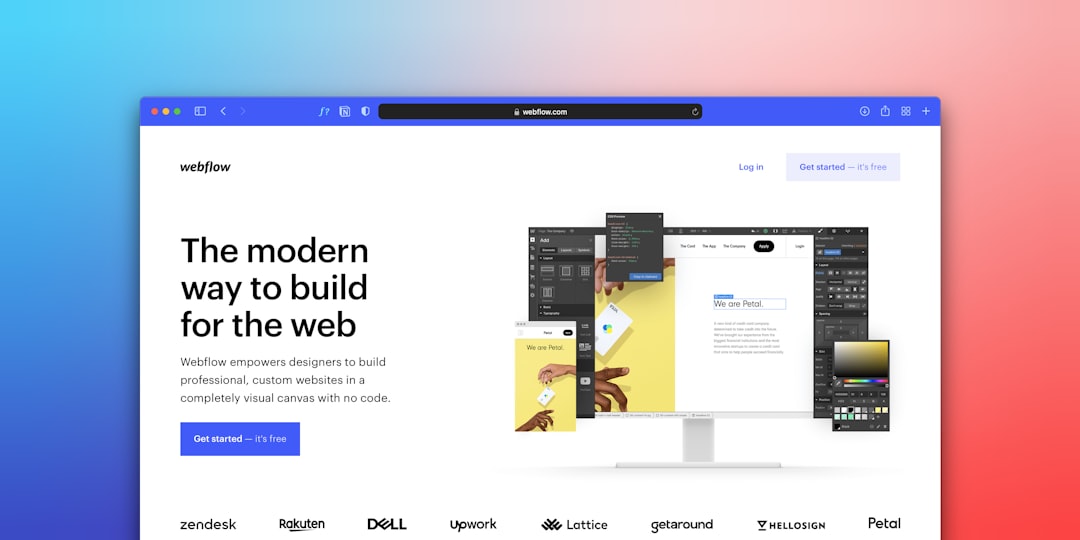
Webflow has long appealed to designers and developers who want visual control without sacrificing clean code. With the addition of AI tools, it now combines automation with advanced customization.
Webflow AI assists in generating layouts, CMS structures, and content suggestions while preserving detailed design control. Unlike more template-centric builders, Webflow outputs production-ready HTML, CSS, and JavaScript.
- Strengths: Design flexibility, CMS capabilities, clean code export
- Best for: Startups, agencies, SaaS companies
- Limitations: Steeper learning curve
This balance of automation and granular control makes Webflow a durable solution, particularly for growing digital businesses.
5. Framer AI
Framer AI has quickly risen as a modern competitor focused on sleek, interactive sites. By prompting the AI with a short description, users can generate an entire website design in seconds.
Framer emphasizes:
- Modern UI aesthetics
- High-performance hosting
- Built-in animations and interactions
- Rapid iteration for product teams
Its edge lies in combining AI speed with real-time collaborative design tools. The platform is particularly popular among startups and tech-focused brands.
Strengths: Speed, performance optimization, contemporary design
Best for: Tech startups, landing pages, product launches
Limitations: Fewer third-party integrations compared to older platforms
6. Durable AI
Durable AI differentiates itself by promising a business website in under a minute. It automatically generates not just the website but also CRM functionality, invoicing tools, and brand assets.
The platform is tailored toward small business owners who want instant online presence without technical friction.
- Strengths: Speed, simplicity, built-in business tools
- Best for: Local businesses and solo entrepreneurs
- Limitations: Limited deep customization
While newer than some competitors, Durable’s focused value proposition and rapid development pace position it as a serious long-term contender.
Comparison Chart
| Platform | Ease of Use | Customization Level | Best For | Ecommerce Strength | Scalability |
|---|---|---|---|---|---|
| Wix ADI | Very High | Moderate | Small businesses | Moderate | High |
| Squarespace AI | High | Moderate | Creative professionals | Moderate | High |
| Shopify Magic | High | Moderate | Online stores | Very High | Very High |
| Webflow AI | Medium | Very High | Agencies, SaaS | Moderate | Very High |
| Framer AI | High | High | Startups | Low | High |
| Durable AI | Very High | Low | Local businesses | Low | Moderate |
Key Factors to Consider When Choosing
When evaluating AI website builders, decision-makers should focus on more than just speed. Consider the following criteria:
- Long-Term Platform Stability: Is the company financially sound and continuously improving?
- Export and Portability: Can you migrate your content if needed?
- SEO Capabilities: Does the platform provide granular search optimization tools?
- Integration Ecosystem: Are marketing, analytics, and CRM tools available?
- Scalability: Can the platform grow with your business?
Durability is not just about technology—it is about company vision, infrastructure, and consistent updates.
The Future of AI Website Creation
AI website builders are moving from novelty tools to foundational business infrastructure. As large language models and generative design systems mature, the distinction between “AI-generated” and “human-built” websites will increasingly blur.
However, businesses must balance automation with oversight. AI accelerates workflows, but strategic design, branding alignment, and long-term content strategy still require human direction.
The six platforms above represent durable competitors because they combine:
- Ongoing feature investment
- Stable hosting infrastructure
- Strong user communities
- Clear product roadmaps
Organizations adopting AI-driven website creation should prioritize platforms that demonstrate both technological capability and operational longevity.
Conclusion
AI-powered website creation is no longer experimental. Mature platforms such as Wix ADI, Squarespace AI, Shopify Magic, Webflow AI, Framer AI, and Durable AI provide reliable pathways to launch and scale digital experiences.
Each platform offers a unique balance between automation and control. Businesses seeking rapid deployment may prefer Durable or Wix ADI. Ecommerce companies will gravitate toward Shopify Magic. Agencies and growth-stage startups may find Webflow or Framer more aligned with their needs.
Choosing the right AI competitor is less about following trends and more about aligning technology with business objectives. With careful evaluation, AI-driven design can become a durable asset rather than a temporary shortcut.