




















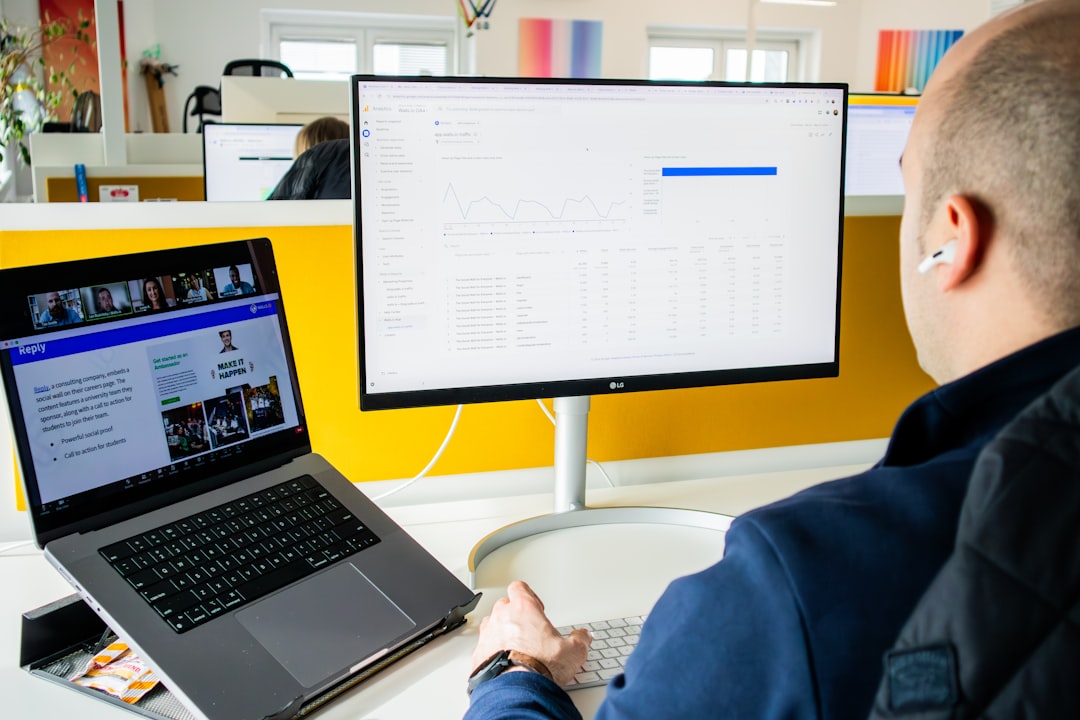
Managed Service Providers (MSPs) operate in environments where downtime is unacceptable, security threats are constant, and client expectations are high. To meet these demands, MSPs rely heavily on robust Remote Monitoring and Management (RMM) platforms. The right software does far more than monitor devices—it automates tasks, strengthens security posture, streamlines patch management, and provides deep visibility across distributed infrastructures.
TLDR: Choosing the right MSP software with remote monitoring capabilities is critical for maintaining uptime, improving security, and scaling operations efficiently. This article examines four leading platforms: ConnectWise Automate, Datto RMM, NinjaOne, and N-able N-central. Each offers powerful monitoring, automation, and reporting features tailored for MSP environments. A comparison chart is included to help you evaluate the differences based on functionality, scalability, and integration capabilities.
Below are four established MSP software platforms that have earned industry trust for their reliability, feature depth, and scalability.
1. ConnectWise Automate
ConnectWise Automate is one of the most comprehensive RMM platforms designed specifically for MSPs managing complex IT environments. Known for its powerful automation engine, Automate enables service providers to monitor unlimited endpoints, automate repetitive tasks, and proactively resolve issues before they impact end users.
Image not found in postmetaKey Features
- Advanced Remote Monitoring: Real-time device health monitoring with customizable alerts.
- IT Automation: Highly configurable scripting engine to automate patching and maintenance.
- Patch Management: Centralized control over Windows and third-party updates.
- Asset Discovery: Automated network scans to identify unmanaged devices.
- Integration: Seamless connectivity with ConnectWise PSA and other third-party tools.
Strengths: Deep customization, mature ecosystem, extensive automation capabilities.
Considerations: The platform can have a steeper learning curve due to its complexity.
This platform is particularly suitable for medium to large MSPs that require granular control and strong integration with professional services automation (PSA) tools.
2. Datto RMM
Datto RMM is recognized for its cloud-native architecture and user-friendly interface. Built with modern MSP workflows in mind, it delivers strong remote monitoring capabilities combined with reliable patch management and security integrations.
Being cloud-based means it requires no on-premises infrastructure, allowing technicians to access monitoring dashboards from anywhere. This flexibility is crucial for distributed teams and hybrid work environments.
Key Features
- Cloud-Based Infrastructure: Rapid deployment without local server requirements.
- Automated Patch Management: Policy-based update control across devices.
- Remote Access Tools: Secure built-in remote control functionality.
- Endpoint Security Integration: Built-in ransomware detection options.
- Custom Reporting: Clear SLA reporting for clients.

Strengths: Intuitive interface, rapid onboarding, strong cloud performance.
Considerations: Automation depth may not be as advanced as highly customizable legacy systems.
Datto RMM is often preferred by MSPs looking for a balance between enterprise-grade features and ease of use. Its cloud-native structure reduces maintenance overhead and simplifies scaling.
3. NinjaOne
NinjaOne has grown rapidly in popularity due to its clean interface, streamlined workflows, and strong focus on automation efficiency. It is particularly well-regarded among small to midsize MSPs aiming for operational efficiency without sacrificing capability.
The platform emphasizes visibility and actionable insights. Its alerting system is intelligent and customizable, allowing technicians to focus on meaningful issues rather than noise.
Key Features
- Real-Time Monitoring: Performance tracking for Windows, macOS, and Linux endpoints.
- Automated Remediation: Policy-driven scripting for issue resolution.
- Backup and Endpoint Security Add-ons: Integrates directly into workflows.
- Remote Control: Secure and fast device access.
- Intuitive User Experience: Designed to minimize technician training time.
Strengths: Ease of use, fast implementation, strong customer support reputation.
Considerations: Advanced enterprise configurations may require additional modules.
NinjaOne’s scalability and simplicity make it attractive for growing MSPs that want minimal administrative burden while maintaining proactive monitoring capabilities.
4. N-able N-central
N-able N-central is engineered for MSPs requiring deep visibility and tight security controls. It offers robust device monitoring, automated patch management, and extensive reporting functions.
Image not found in postmetaKey Features
- Comprehensive Device Monitoring: Covers servers, desktops, virtual machines, and network devices.
- Security Manager: Integrated antivirus and endpoint detection integrations.
- Automation Policies: Conditional automation rules for issue resolution.
- Multi-Tier Architecture: Suitable for larger MSP environments.
- In-Depth Reporting: Customizable dashboards and executive summaries.
Strengths: Enterprise-grade functionality, strong security integration.
Considerations: Deployment and configuration may require more initial setup time.
N-central is well-suited for MSPs handling regulated industries or clients that demand high compliance standards and detailed reporting transparency.
Comparison Chart
| Platform | Deployment Model | Automation Depth | Cloud Native | Best For |
|---|---|---|---|---|
| ConnectWise Automate | On-premises / Cloud hosted | Very Advanced | Partial | Mid to large MSPs needing deep customization |
| Datto RMM | Cloud-based | Moderate to Advanced | Yes | MSPs seeking ease of use and scalability |
| NinjaOne | Cloud-based | Advanced | Yes | Growing MSPs prioritizing efficiency |
| N-able N-central | Hybrid / On-premises | Advanced | Partial | Security-focused and enterprise MSPs |
What to Consider When Choosing MSP Software with Remote Monitoring
While all four platforms provide strong remote monitoring capabilities, selecting the right solution depends on several operational factors:
- Scalability: Can the platform grow with your client base?
- Integration Ecosystem: Does it connect seamlessly with PSA, backup, and security tools?
- Automation Capabilities: How much manual intervention can be eliminated?
- Security Layers: Are compliance and threat detection features included?
- User Experience: How quickly can technicians become proficient?
Remote monitoring today is about more than reactive alerts. The strongest platforms provide predictive insight, automated remediation, centralized management, and clear reporting that demonstrates value to clients.
Final Thoughts
Remote Monitoring and Management software remains the technological backbone of every successful MSP. Platforms like ConnectWise Automate, Datto RMM, NinjaOne, and N-able N-central represent industry standards because they combine proactive monitoring, automation, and security capabilities in scalable frameworks.
The best choice ultimately depends on the size of your MSP, your technical expertise, and the complexity of your client environments. Careful evaluation—preferably through trial deployments—will ensure that your selected platform not only meets today’s operational needs but also supports future growth.
In a competitive managed services market, investing in a reliable remote monitoring platform is not optional—it is foundational to delivering consistent, secure, and high-quality IT services.